| How To Photograph
Flowers ©Chuck DeLaney NYI Dean 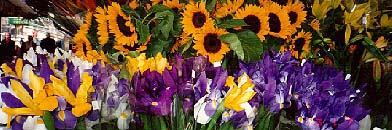 We all know that April showers bring May flowers. Since we've had a
rainy April - witness the floods in the Dakotas - we can assume a bumper
crop of May flowers. And flowers are a favorite target of every camera
enthusiast. Here are a few tips to help you make your flower pictures
knockouts. We all know that April showers bring May flowers. Since we've had a
rainy April - witness the floods in the Dakotas - we can assume a bumper
crop of May flowers. And flowers are a favorite target of every camera
enthusiast. Here are a few tips to help you make your flower pictures
knockouts.
When you photograph flowers, you have to make a couple of important decisions. As with any photograph, your first decision is to decide: What's my subject? Is it a macro of a stamen? A single flower closeup? A bed of hundreds of flowers? A field of thousands? From this decision will flow many specifics of your picture. ©NYI Student Hubert Vollee When you shoot a macro, focus is all important. Your plane of
focus is very shallow - just a fraction of an inch. So you have to make
another decision: Exactly what part of the flower do you want to be in
sharp focus? The pistil? The stamen? A petal? (We've run out of
high-school biology terminology, but you get the idea.) Unless you're a
botanist, you will probably make this decision "on the fly" - that is, as
you look through the viewfinder. When you see the image that you want,
snap it!
©NYI Instructor, Jerry Rice How should you expose this shot? The easy way is to trust your meter.
It will generally give a fairly accurate reading in this situation. For
pinpoint exposure, however, we recommend that you use a gray card or take
an incident reading. (These alternate methods have previously been
explained on this site. If you are unfamiliar with them, they may still be
posted in the Recent Topics section.) By using one of these
alternative methods, you end up with an exposure that is precisely
calibrated to the light, and is not affected by the color or reflectivity
of the flower.
©NYI Student Mozelle K Whitford Good focus is still important, but it's not so critical as it was with
the macro. The zone of good focus is now a few inches, not just a fraction
of an inch. So, while you still want to focus well, you don't need to
watch focus so critically.
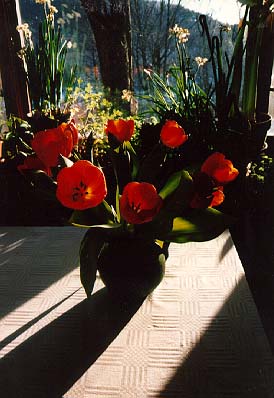
An added decision for you to make with this type of shot is to consider
the direction of light. It's possible to take a very attractive
picture with the light in its "usual" position, streaming from behind you
toward the flower. But give strong consideration to backlighting
- that is - light coming from behind the flower, toward the camera. Since
flower petals are usually translucent, backlighting can give them an
iridescent glow that accentuates the flower's color and brings it to life.
©NYI Two words of warning here. First, when the light comes from behind you,
watch your own shadow carefully. Usually, you want to avoid
casting a shadow on the flower. Second, when you are shooting with the
flower backlit, watch out for flare. You don't want the incoming
light to shine directly into your lens producing ghostlike blobs. (You can
avoid flare by either positioning your camera so that the light doesn't
shine directly into your lens, or by shading the lens with your hand or a
hat or any other opaque object. Just be sure that the object is kept out
of the image frame.)
©NYI Instructor, Jerry Rice In other words, from what angle do you want to shoot the flower?
Once again, the answer is best determined by your eye. As you walk
around the flower to watch the play of light from different sides, also
look through the viewfinder to see how it looks from different heights.
Don't be lazy. Lie down to see it from a squirrel's-eye view. Stand up and
raise your tripod to see it from a bumble-bee's view. Let your eye decide
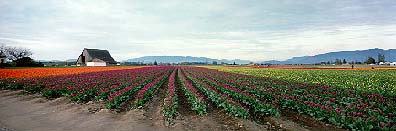
which you prefer. What about a bed of flowers...or a field of them?
Here, you can probably use a point-and-shoot as well as an SLR. A tripod
is less necessary. Focus is no longer critical - it can extend for feet or
even miles. And metering with your built-in meter will probably produce a
good result. ©Chuck DeLaney NYI Dean ©NYI To sum all this up: Flowers are colorful and can make beautiful
subjects when you're close up and they fill the frame. You're better off
finding another subject, and using the flowers as an "accessory," when
you're shooting from farther away.
|
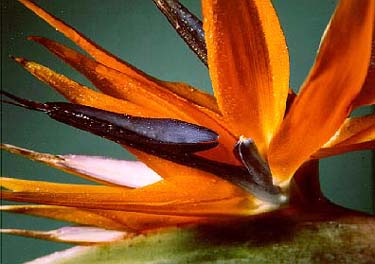 Let's start with the macro - that is, with extreme closeups. Of
course, you can only take this type of picture if your lens has a macro
mode. This rules out most point-and-shoots which can't focus closer than
two or three feet. With a macro, you're focusing from a few inches!
Let's start with the macro - that is, with extreme closeups. Of
course, you can only take this type of picture if your lens has a macro
mode. This rules out most point-and-shoots which can't focus closer than
two or three feet. With a macro, you're focusing from a few inches!
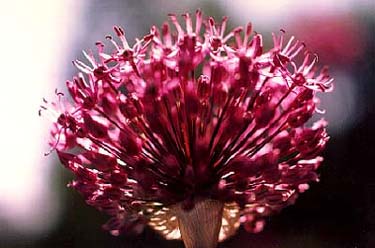 While it is possible to take a good macro handheld, our
advice is to use a tripod if at all possible. Since the flower is probably
swaying in the wind, changing the focal point every moment, you're better
off not adding the additional confusion of a swaying camera too. Use a
tripod and be patient. Most often, the wind will die down from time to
time and the flower will stand still and "pose" for an instant. That's the
instant to shoot!
While it is possible to take a good macro handheld, our
advice is to use a tripod if at all possible. Since the flower is probably
swaying in the wind, changing the focal point every moment, you're better
off not adding the additional confusion of a swaying camera too. Use a
tripod and be patient. Most often, the wind will die down from time to
time and the flower will stand still and "pose" for an instant. That's the
instant to shoot! 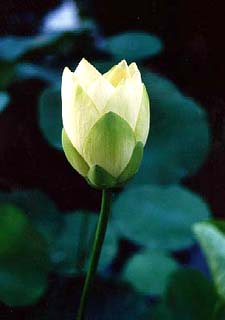 While on the subject of wind, here are some other tips: If the wind
is blowing hard and steady, the flower will probably sway incessantly and
fast, so that you will be hard-pressed to get the shot. Consider waiting
for another time - perhaps, the next day - when the wind has died down. If
you must shoot during an unremitting wind, place a make-shift shelter
around the flower to protect it from the wind. A few sheets of poster
board may be sufficient. (Of course, keep the shelter out of the picture!)
Or tie the flower stem to a thin post (the type you will find in any
garden center). Or both.
While on the subject of wind, here are some other tips: If the wind
is blowing hard and steady, the flower will probably sway incessantly and
fast, so that you will be hard-pressed to get the shot. Consider waiting
for another time - perhaps, the next day - when the wind has died down. If
you must shoot during an unremitting wind, place a make-shift shelter
around the flower to protect it from the wind. A few sheets of poster
board may be sufficient. (Of course, keep the shelter out of the picture!)
Or tie the flower stem to a thin post (the type you will find in any
garden center). Or both.
 ©NYI Student Cyndie Eason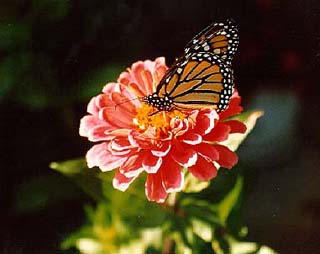
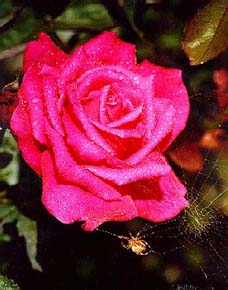
 Let's move on to consider the shot of a single
flower head. Much of what we said for the macro, applies here too. You
can't get close enough for this type of picture with most point-and-shoot
cameras. You're better off using a tripod. Exposure will be more precise
if you use a gray card or take an incident reading. And the picture will
often be improved if you can add a crawling critter.
Let's move on to consider the shot of a single
flower head. Much of what we said for the macro, applies here too. You
can't get close enough for this type of picture with most point-and-shoot
cameras. You're better off using a tripod. Exposure will be more precise
if you use a gray card or take an incident reading. And the picture will
often be improved if you can add a crawling critter.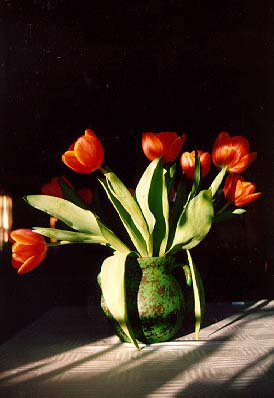
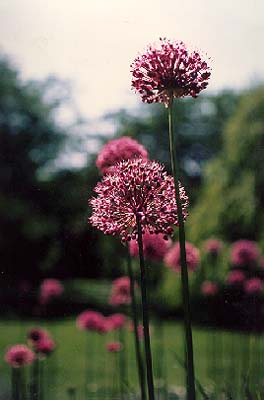 There's a second additional decision to make when you are shooting
a single flower head. How high or low do you want the
camera to be?
There's a second additional decision to make when you are shooting
a single flower head. How high or low do you want the
camera to be?
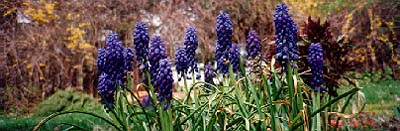
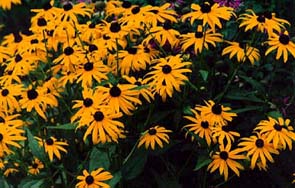 What should you look out for here? We think you should go back to
the very first decision: What's your subject? A bed or field of
flowers may look exquisite to your eye, but often makes an awfully dull
picture. Look for something that will add interest to the picture.
Something else that will draw the eye of the viewer and be the subject of
your picture, with the flowers acting as swatches of color that complement
it.
What should you look out for here? We think you should go back to
the very first decision: What's your subject? A bed or field of
flowers may look exquisite to your eye, but often makes an awfully dull
picture. Look for something that will add interest to the picture.
Something else that will draw the eye of the viewer and be the subject of
your picture, with the flowers acting as swatches of color that complement
it.
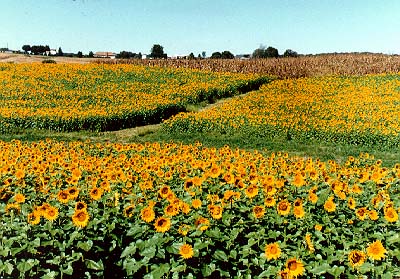 If you're photographing a flower bed, look around. Perhaps, a child
playing amidst the flowers will make a far more interesting picture. Or
the house behind it. Or the apple tree in the foreground? Or the fence. Or
anything else you can find to draw the viewer's eye and add interest.
If you're photographing a flower bed, look around. Perhaps, a child
playing amidst the flowers will make a far more interesting picture. Or
the house behind it. Or the apple tree in the foreground? Or the fence. Or
anything else you can find to draw the viewer's eye and add interest.